
Green Growth Blog

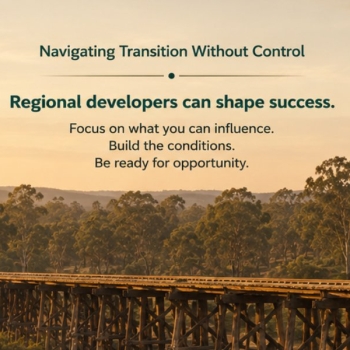
Navigating transition without control

Navigating transition without control

One of the sentiments I glean from regional developers is a degree of caution about taking a leadership role in energy transition discussions.

Naturally, they welcome the opportunities that can accompany major investment:

  • New infrastructure
  • Local procurement opportunities
  • Workforce development
  • Industry diversification
  • Population growth
  • Improved regional services
  • Community benefit funding

Unfortunately, many of the factors that determine whether these benefits are realised sit outside the economic developers’ direct influence. Others:

  • Set energy policy
  • Approve projects
  • Build transmission infrastructure
  • Operate electricity marketsDetermine coal closure schedules
  • Allocate private capital
  • Shape broader community sentiment

Yet regional and economic developers are often expected to help communities, governments, industry and investors navigate the transition. Their role is less about making decisions and more about translating complexity into practical opportunities, actions and partnerships. They work across councils, government agencies, developers, landholders, industry groups, training providers, community organisations, Traditional Owners and investors to help regions respond to change.

The challenge is that when regional developers champion transition agendas, they can find themselves associated with expectations that depend on decisions made by governments, investors and project proponents.

The more empowering position, however, is to recognise that while regional developers may not control the transition, they can influence the conditions that shape its success. They can strengthen collaboration, build regional capability, identify opportunities, support informed decision-making and help ensure regions are prepared to benefit from change when it occurs.

Shaping conditions for success

The challenge is not to predict exactly how the transition will unfold. Nor is it to take responsibility for decisions that sit with governments, investors, regulators or project proponents.

The challenge is to understand and strengthen the conditions that allow regions to respond successfully to change.

Taking a more structured approach to understanding regional readiness can be valuable.Rather than focusing on individual projects, technologies or policy settings, the Regional Transformation Framework I’ve developed encourages regions to step back and consider the broader factors that influence long-term prosperity, resilience and adaptability. It helps regions assess the capabilities, relationships, assets and conditions that support successful responses to economic, environmental and social change.

Importantly, it is not a transition plan, a detailed strategy or a major consulting exercise. It is designed as a practical and relatively low-cost way for regions to take stock of where they are today and identify areas that may warrant greater attention in the future.

The accompanying Tracking Tool provides a structured process for assessing strengths, identifying gaps and tracking progress over time. Rather than attempting to predict a single future, it helps regions understand whether they are building the foundations needed to respond to a range of possible futures. It prompts consideration of questions such as:

  • Are we building the workforce needed for future opportunities?
  • Are local businesses positioned to benefit from emerging investment?
  • Do stakeholders share a common understanding of regional priorities?
  • Are we strengthening the natural, social and economic assets that underpin future prosperity?
  • Are we building the relationships and capabilities needed to respond to change?

Most importantly, the process helps regions focus on what they can influence rather than what they cannot.

In an environment where policy settings, project pipelines and investment decisions continue to evolve, understanding regional readiness may be more valuable than attempting to predict the future. By assessing current conditions and identifying practical actions, regions can prepare for a range of possible futures without over-investing in any single one.

For regional developers, this offers a way to engage constructively in transition discussions without becoming responsible for outcomes beyond their control. Instead of trying to determine the future, they can help create the conditions that allow their region to thrive regardless of how the transition unfolds.
Reflections from EDA's Brisbane Roadshow Event 2026

Reflections from EDA's Brisbane Roadshow Event 2026

Reflections from EDA’s Brisbane Roadshow 2026

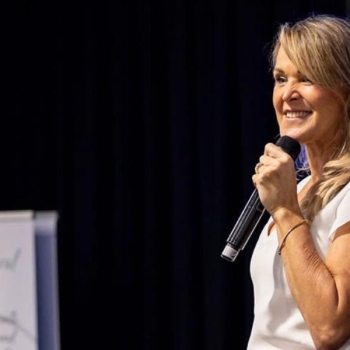
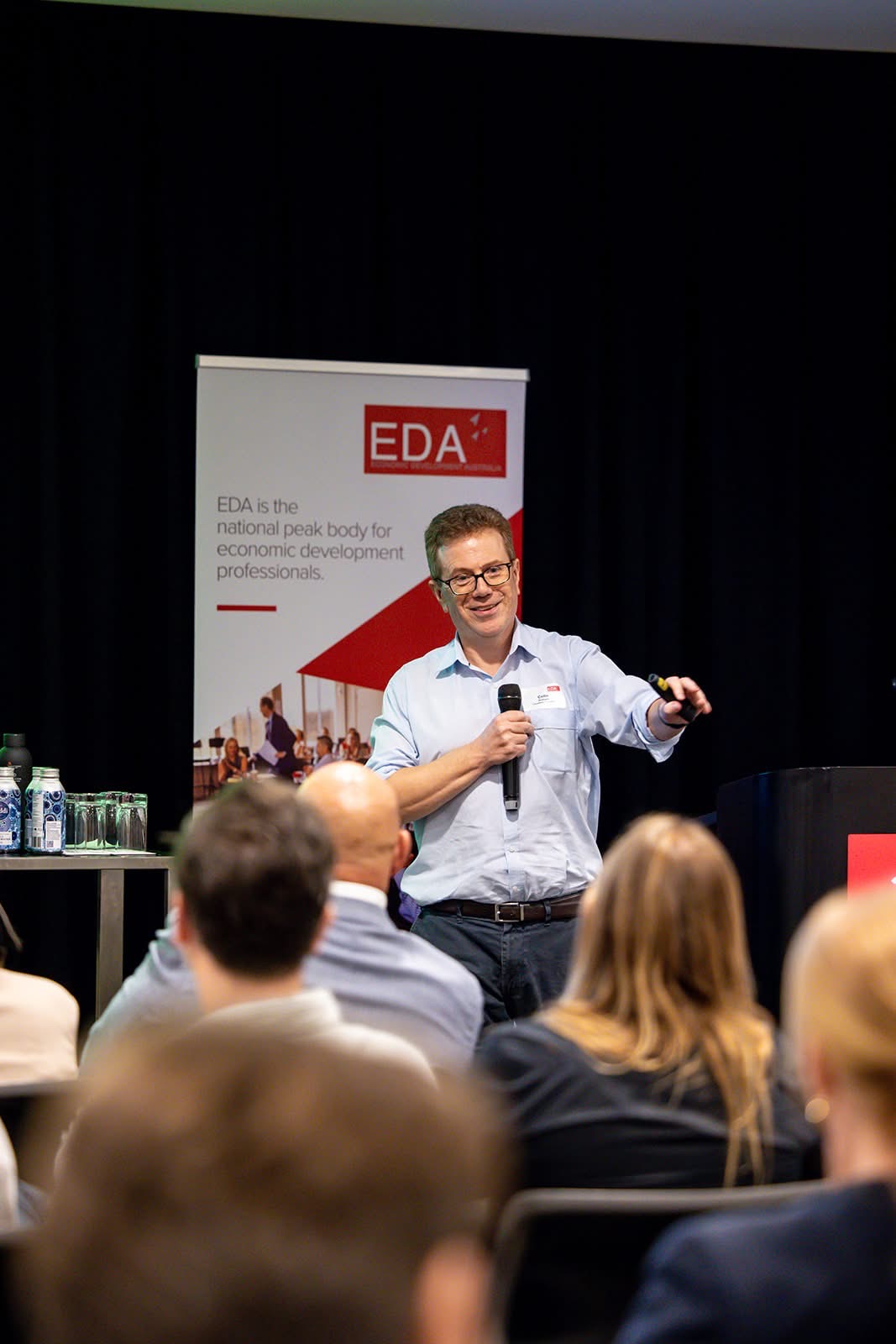
Economic Development Australia’s National Roadshow in Brisbane was more than a valuable networking and learning opportunity. It was a timely reminder that Australia’s regional economic future depends on how well we understand place and plan for 50 years into the future. As a local sponsor and participant, I was pleased to be part of a conversation.

I’ve taken the liberty of relaying the takeaways and their implications for green growth.

Why Exponential Thinking Matters for Regions

Impact investor Lisa Andrews set the tone with a compelling keynote on the mindset and technology we need to adopt for impact. She challenged us to move beyond linear planning and adopt mindsets that can accelerate technology adoption and system‑level change. Her example of being both a futurist and impact investor demonstrates we need to not just think about new tools, but deploy new ways of organising capital, institutions, and incentives to deliver outsized positive impact. 

There is so much green and enabling technology available—and so many reasons for optimism—but its development and deployment must be guided by principled care. Without care, the risk of unintended consequences is real, particularly when changes ripple through communities and environments that are already vulnerable.

From a resilience perspective, we should ask: how do we harness exponential thinking in ways that strengthen ecosystems—natural and social capital for value added green industries that at the same time as improve economic productivity.

Place-Based Strategy and the Power of Unique Value Propositions

Paul Cranch, a respected thought leader in investment attraction, emphasised the importance of focus in economic strategy. Rather than spreading effort across too many priorities, he challenged regions to clearly identify and deliberately leverage their unique value propositions.

In practice, this is more difficult than it sounds. Unique value propositions are rarely captured by marketing slogans alone; they are typically embedded in the natural endowments, histories and capabilities that have shaped a region over generations. Importantly, this includes natural capital. Understanding and protecting the natural systems on which regional economies depend is not a constraint on development but a source of enduring competitive advantage.

As strategic and land‑use planning moves through to investment decisions, a clear articulation of place‑based assets helps align public and private effort towards productivity. This alignment is critical for the emergence of new green industries, which tend to be highly place‑specific—drawing on local ecosystems, resources, skills and infrastructure. Regions that understand the full suite of capital already present—natural, social, institutional and economic—are better positioned to identify where green industries can take root and to attract investment that builds on, rather than undermines, those foundations.

The Sunshine Coast: Innovation and Stewardship as an Economic Strategy

The Sunshine Coast is a powerful case study in long‑term, stewardship‑led innovation. Drawing on five decades of foresight and investment on the coast, Colin Graham illustrated how deliberate planning decisions have translated into sustained job creation, a growing knowledge economy, and improved health outcomes. 

Anchor institutions such as the University of the Sunshine Coast and associated hospitals have played a critical role, creating employment pathways while attracting complementary investment. These outcomes have been further strengthened by enabling infrastructure, including a high‑speed, deep‑sea internet cable that has encouraged technology companies and digital innovation to locate in the region. 

From a natural capital perspective: what distinguishes the Sunshine Coast from many other regions in South East Queensland is its long‑standing sensitivity to the natural environment. While early agricultural industries—sugar, horticulture, dairy, and timber—shaped the landscape, the region’s evolution into a tourism hub was accompanied by a stronger community commitment to environmental stewardship. Today, the Sunshine Coast and Noosa are internationally recognised for preserving natural beauty while growing the economy—an outcome that was neither accidental nor inevitable. 

I recall participating in early innovation ecosystem conversations through ECOllaboration, where there was a conscious effort to ensure that economic ambition sat alongside stewardship of land and water. The types of approaches used by the Sunshine Coast’s Food and Agribusiness Network members is a clear testament to what can be achieved when care for nature is built into production and growth strategies, rather than treated as an externality.

Landuse planning and long term productivity

The economic productivity and social dimension of economic development was highlighted by Kerrianne Haggie’s exploration of data‑driven job ecosystems. Her analysis covered the profound intergenerational impacts of urban development patterns that separate housing from employment centres. 

According to Kerrianne’s research the effects compound over time:

  • First generation -  fewer local jobs, longer commutes, insecure work, reduced disposable income, and less time for family interaction.
  • Second generation - limited exposure to career pathways, lower skills attainment, and weaker workforce attachment.
  • Third generation - entrenched disadvantage and increased welfare dependency. 

These patterns are not only socially inequitable—they are economically inefficient. Low productivity is the inevitable outcome when talent is disconnected from opportunity. As both an ESG professional and an economic developer, this intersection of social outcomes and productivity resonated deeply with my motivations. 

What This Means for Green Growth

Overall, the day reinforced the imperative for strategic planning, place‑based job creation, via technology and investment frameworks that integrate exponential growth with measurable impact.

What became increasingly clear is that green growth is not a niche agenda—it is the logical evolution of economic development once we fully account for the systems on which our economies depend. The role of natural capital—was assumed as the basis for our economies and societies. It is worth me making it explicit here. 

Natural capital—our land, water, biodiversity and ecosystems—is not simply an environmental consideration to be balanced against growth. It is a productive asset that underpins prosperity, workforce participation, innovation and liveability. Thinking about natural capital helps regions:

  • Identify and articulate their unique value propositions
  • Inform land‑use planning for housing, industry, and infrastructure
  • Build resilient economies that can adapt to climate and market change

The economic professionals in the room were implicitly encouraged to:

  • Understand their regional assets in a holistic sense—natural, social, institutional and economic
  • Invest with long‑term intention, rather than chasing short‑term growth metrics
  • Be active and informed participants in land‑use decisions, recognising their generational consequences

From a green growth perspective, this represents a shift from mitigation to value creation. When development pathways are aligned with natural systems rather than working against them, regions are better positioned to attract investment, deliver quality jobs and avoid the costly trade‑offs that so often emerge later.

If we take seriously the advice shared by speakers at the Brisbane Roadshow—particularly around place‑based strategy and long‑term thinking —we will be far better equipped to deliver growth that is productive, inclusive and resilient. Not just for the next investment cycle, but for the decades ahead.

Paul Collins

Kickstart a green growth project in early 2026

Kickstart a green growth project in early 2026

Why? 

The start of the year is when many economic development teams are asked to set priorities, refresh work programs, and identify initiatives that can show progress over the months ahead. Renewable energy, business sustainability, circular economy and green growth projects are increasingly expected to feature — alongside investment attraction, business support, workforce development, and a growing list of other priorities.

Making progress with such big goals and a new area of economic/regional development can be tricky. For many professionals the issues are:

  • knowing where to start
  • understanding what’s feasible within existing time constraints/budgets and
  • how to make progress without over committing to a long or complex project

How? 

For many teams, the pressure is not whether to pursue the greener aspects of economic development, but how to do so in a way that is practical and achievable.

As much as I love working on large strategies, I know they aren’t always the right starting point. Often, what’s most valuable is focused support that helps clarify an idea, test a direction, or get a specific initiative moving — without adding to workload or complexity. At these times, I’ve found a small (e.g. 5 hour) consultancy engagement, can often unlock clarity, confidence and momentum.

Getting a little advice saves time and effort by creating clarity. Expert input helps distinguish what is feasible now from what may require further work, enabling teams to clearly articulate purpose, economic relevance, and alignment with existing priorities. This early clarity also supports more confident decision‑making and action.

The injection of outside helps teams to move forward practical ways. By working within a clearly defined scope and timeframe, it reduces risk by allowing ideas to be explored, tested, and refined without over‑committing resources or locking in long‑term obligations.

Just as important, a focused engagement establishes a credible starting point and supports internal conversations. Tangible early progress builds confidence, strengthens stakeholder discussions, and creates traction for what comes next.

Knowing all this, I’m keen to help teams move from consideration to action with a short consultancy engagement. Ergo, I’m offering a discounted, five‑hour consultancy engagement in January and February 2026.

What? 

Together, in five focused hours, we could work on one of the following:

Setting direction and priorities

  • Refine annual economic development, green growth priorities
  • Review progress and lessons from 2025 efforts in creating a circular economy
  • Assess alignment of sustainability‑related Expenditure Review Committee bids
  • Developing and testing ideas

Map green growth opportunities for your region or sector

  • Conduct a SWOT of green growth potential
  • Brainstorm strategic, high‑impact projects
  • Workshop a complex or challenging sustainability issue
  • Determine the next steps on a renewable energy project
  • Designing programs and frameworks

Outline program logic or structure

  • Develop a concept design for a Green Innovation Program
  • Scope a Sustainability Awards Framework
  • Draft a policy framework and outline analysis steps

Informing decisions and options

  • Analyse and prioritise policy options
  • Conduct a sustainability influence or stakeholder network analysis

These examples are indicative. Scope for your 5-hour engagement will be agreed upfront to ensure the engagement is focused, achievable, and useful.

January and February only

This offer is deliberately limited to January and February to align with early‑year planning cycles and to ensure the work is genuinely useful at the point when priorities are being set. It also reflects the structure of my project calendar. By keeping the number of short, focused engagements small, I can give each one the preparation, attention, and follow‑through it deserves. Please be assured intent is not to create artificial urgency, but to provide a well‑timed option for teams that are ready to make progress early in the year and provide you with specialist advice.

Who? 

You or your delegate are essential. Depending on what you choose to work on your decision-makers, team or people from other teams in your organisation might be included too. We can chat about what is sensible for your objective, the time involved and your needs.

You can let your colleagues know: I am an economic developer and applied environmental scientist with more than 25 years of experience working with governments, industries, and regional organisations. I specialize in green growth, economic and climate resilience, and industry advancement. Everything I do is grounded in a deep understanding of government and industry decision‑making contexts; that I gained through delivering programs and projects across multiple jurisdictions.

Next steps - call Julia on 0409 326 836

If a short, 5-hour consultancy sounds useful to you, the next step is simple: please give me a call on 0409 326 836.

A brief conversation is often the easiest way to confirm whether the 5-hour consultancy is a good fit for you right now.

We can chat and there’s no obligation to proceed. I want to make sure the scope and timing will work. Once we are sure it will add value, we can confirm an agreement via email to cover the five hours and get started. (I know you may have some additional steps at your end which I am happy to move through with you).

Get in contact

0409 326 836 

Get in contact

0409 326 836 

Address

Brisbane,
Queensland

Address

Brisbane,
Queensland